

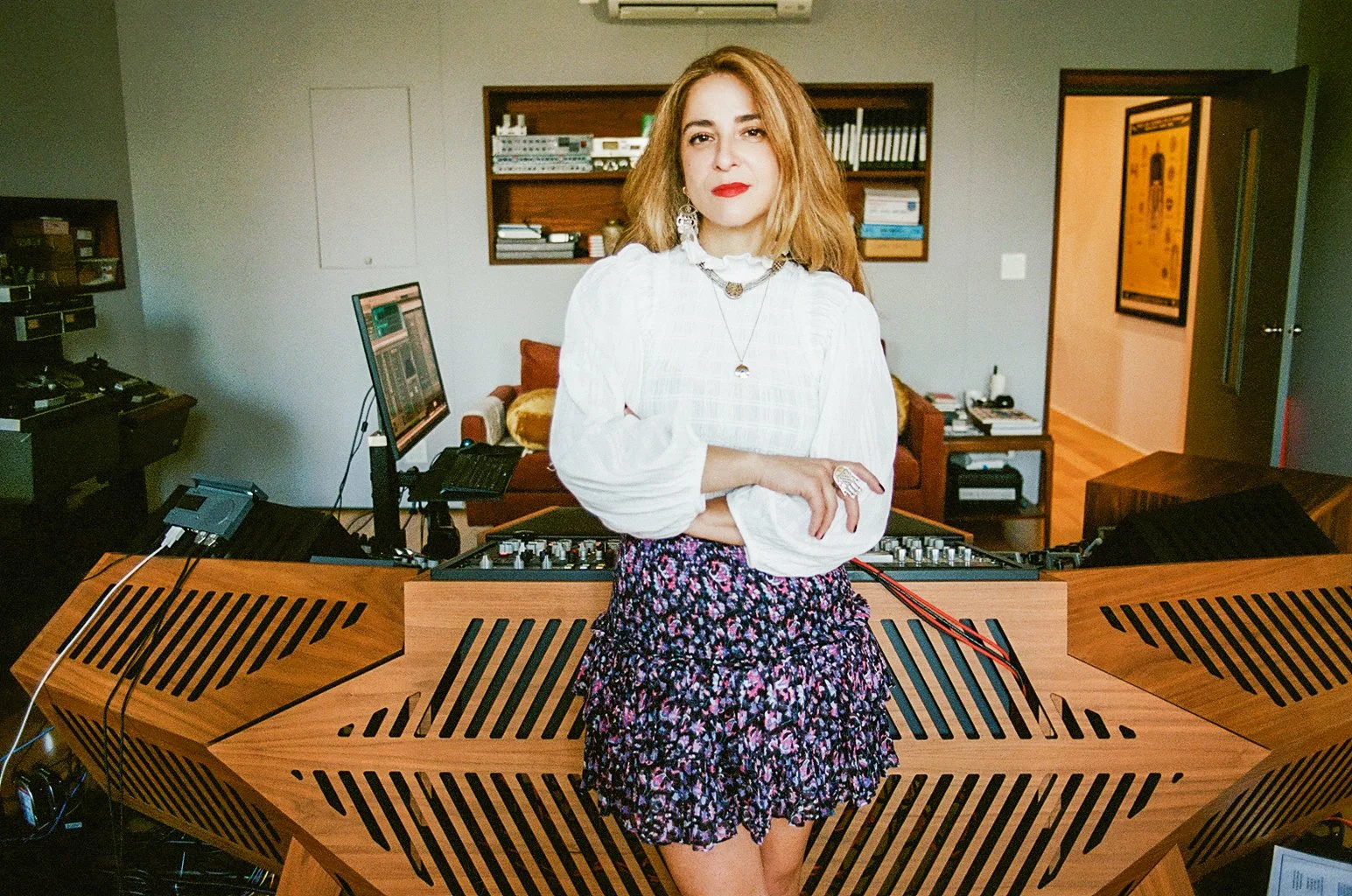
Heba Kadry in her studio in Brooklyn (photo credit: Olena Shkoda)
Words by: Yasmin El Rabiei
Photos by: Olena Shkoda
Link to Article
A London police siren slices through our call at the exact moment Heba Kadry is describing how cities – with their chaos, their dissonance, their accidental music – shape her sonic instincts. The timing is ironic so I have to ask whether that particular wail does anything for her ear. She laughs at the remark, familiar with urban cacophony. Heba Kadry has spent her whole life tuning into the noise most people try to tune out.
An Egyptian-born, Brooklyn-based sound engineer and mastering genius, Kadry has shaped some of the most impactful records of the past decade. From Björk to Blood Orange, Slowdive to Lucy Dacus, Gorillaz to Miguel, her credits span experimental, indie, pop, and electronic music – albums that feel at once intimate and influentially wide in scope. In a field long dominated by men, Kadry has become one of the most trusted ears in music. Her fingerprint is there in the moments where records feel both deeply personal and impossibly expansive.
It’s surprising, given how precise and inevitable her talent feels in hindsight, that her career really doesn’t read like a linear movie plot, actually it feels more like an open-world video game. The kind where you unlock unexpected skill branches through side quests, and each seemingly random encounter leads to a major turning point.

Photo credit: Olena Shkoda
She stumbled into music when art directors at her first client services job in Egypt needed a piano piece for a Cadbury commercial, and her classical piano training proved useful. A hidden ability got activated, and the path shifted. She went on to study audio engineering in Ohio, then after a short stint at SugarHill studios in Houston – the longest running recording studio in the U.S – she moved to New York in 2007. It’s a really compelling mix of timing, intuition, and potential waiting for opportunity to tap at the door.
Learning to Listen
Growing up North African/Arab, Kadry’s musical foundation was built on immersion. “My family had such a deep appreciation of music,” she reminisces. “It shaped me so much as a child, this heavy classical art. We’re Arabs, we listen to Fairouz in the mornings and Umm Kulthoum in the evenings,” she recalls. “We revere them so much, even just watching them, it feels like they’re reaching divinity.”
Those hours spent absorbed in the nuances of the iconic voices in classical Arab music were her first lessons in active listening, unknowingly training her ear to perceive detail, emotion, space, and even the drama of long pauses.
That same attention to detail, curiosity, and care runs in her blood; her grandfather was a mathematician and civil engineer employed at Egypt’s state railway. He was commissioned to engineer the difficult transportation and preservation of ancient Egyptian tombs,mummies and artefacts such as the statue of Ramses II. A heritage of meticulous preservation she proudly acknowledged on Instagram recently, during the opening of the Grand Egyptian Museum.
It’s easy to see how these early moments of attentive listening shaped her professional approach. Her insistence on the integrity of her studio’s acoustic environment grows directly from that same sensitivity to detail and interference. The dimensions and angles of a room profoundly determine how music is heard. Working in her meticulously built studio in Dumbo, Brooklyn, designed by Sondhus Acoustics, where acoustic interference is virtually eliminated, she surrounds herself with a space designed to absorb, diffuse, or reflect sound in perfect balance.
“You make bad decisions if the room acoustics aren’t accurate,” she says. “Whatever comes out of the speakers needs to be as unaltered as much as it can by the room. You can’t do this job right without an acoustically tuned monitoring environment”
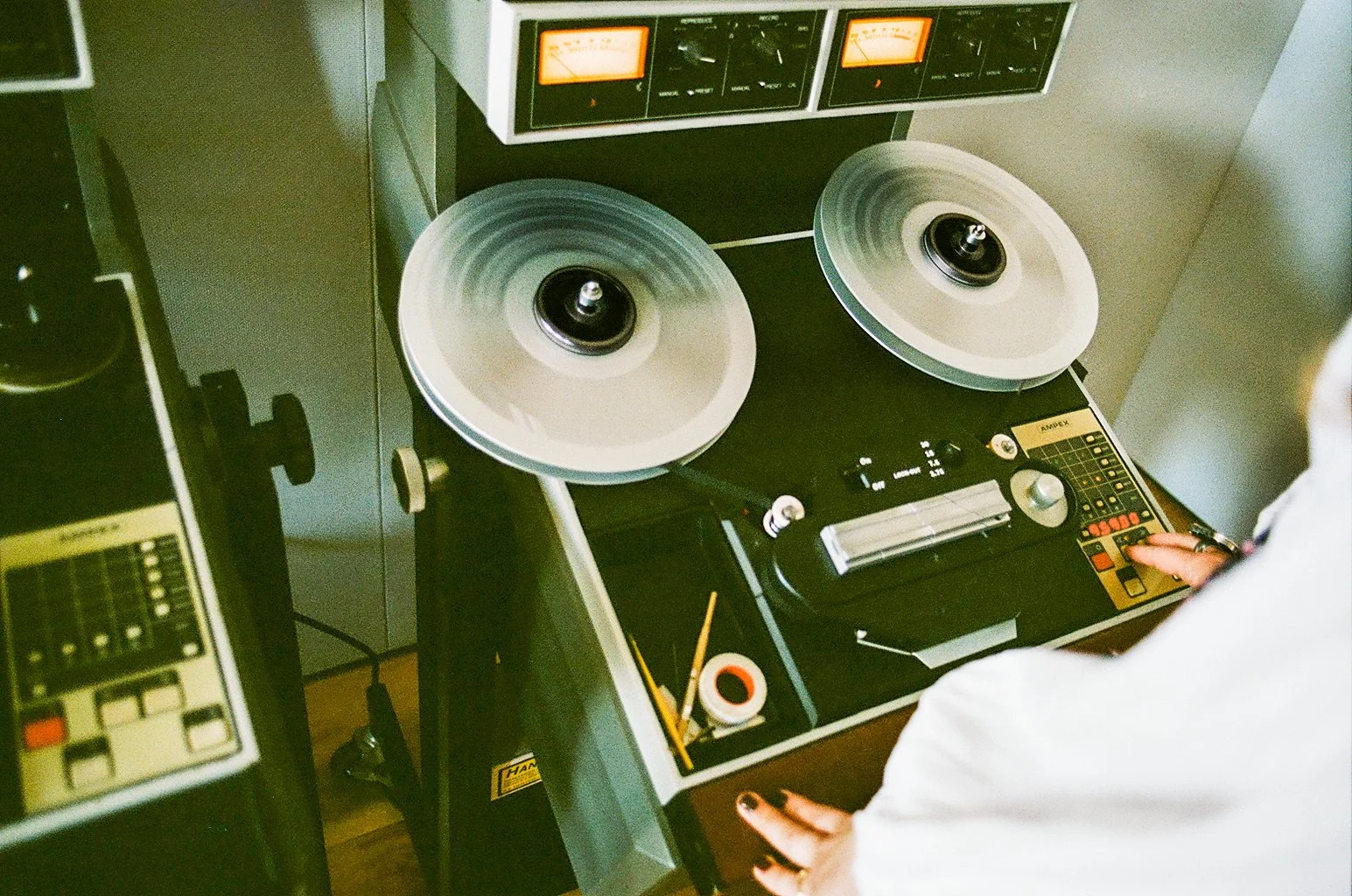
Photo credit: Olena Shkoda
Pointing past racks of expensive gear, she tells me “My room is more important than any of this. Early in my career I was drawn to all the analog gear, but now I’ve pivoted to the acoustics of the space as the ultimate tool in your belt. Now I have a room I trust implicitly… It’s the difference between having a shitty cheap chef’s knife and the ultimate chef’s knife. You make better decisions.”
Mastering is a strangely esoteric process, one that almost demands metaphor to make sense to anyone outside of it, and Kadry has often leaned on the ‘art curator’ analogy offered by Miho Hatori of Cibo Matto. The painting is beautifully finished, it’s the light, positioning and decisions of the curator that animate its place in the gallery, arriving at the viewer’s gaze as a unified experience ready to be interpreted.
“Mastering is the final link in the entire music production chain. It’s our job to take this collection of songs with different engineers and producers, recorded in different studios at different times, and make it feel like it’s all cut from the same cloth” she says. “Artists spend years of their life on this work, you want to shape it in the best way possible.”
The Push and Pull of Analog vs. Digital
While we all seem to fret about AI’s encroaching shadow, it’s reassuring to remember that what truly matters is the human nuance and tactile engagement technology can’t replicate. For Kadry, who still enjoys analog over digital whenever it suits, it’s about slowness, decisiveness, and commitment.
On a computer, you can almost always reverse or hit undo, nothing is set in stone. Analog, by contrast, forces you to commit on the spot, each choice carving the track in real time with no way to rewind or go backward. What’s captured is an ephemeral moment made eternal, making analog riskier, but of course, all the more alive for it. “You have to capture the master in real time off the analog mastering console and then commit to the capture since it’s a time consuming process. This makes you really think about your decisions rather than knowing at the back of your head you can easily change things if it was done digitally.” she says. “The limitation is a blessing in a way. Things sound more human and in a way imperfect with an analog approach. As much as it’s a pain in the ass, I like working with tubes, components, and knobs. It’s tactile and immediate. It works with your intuition.”
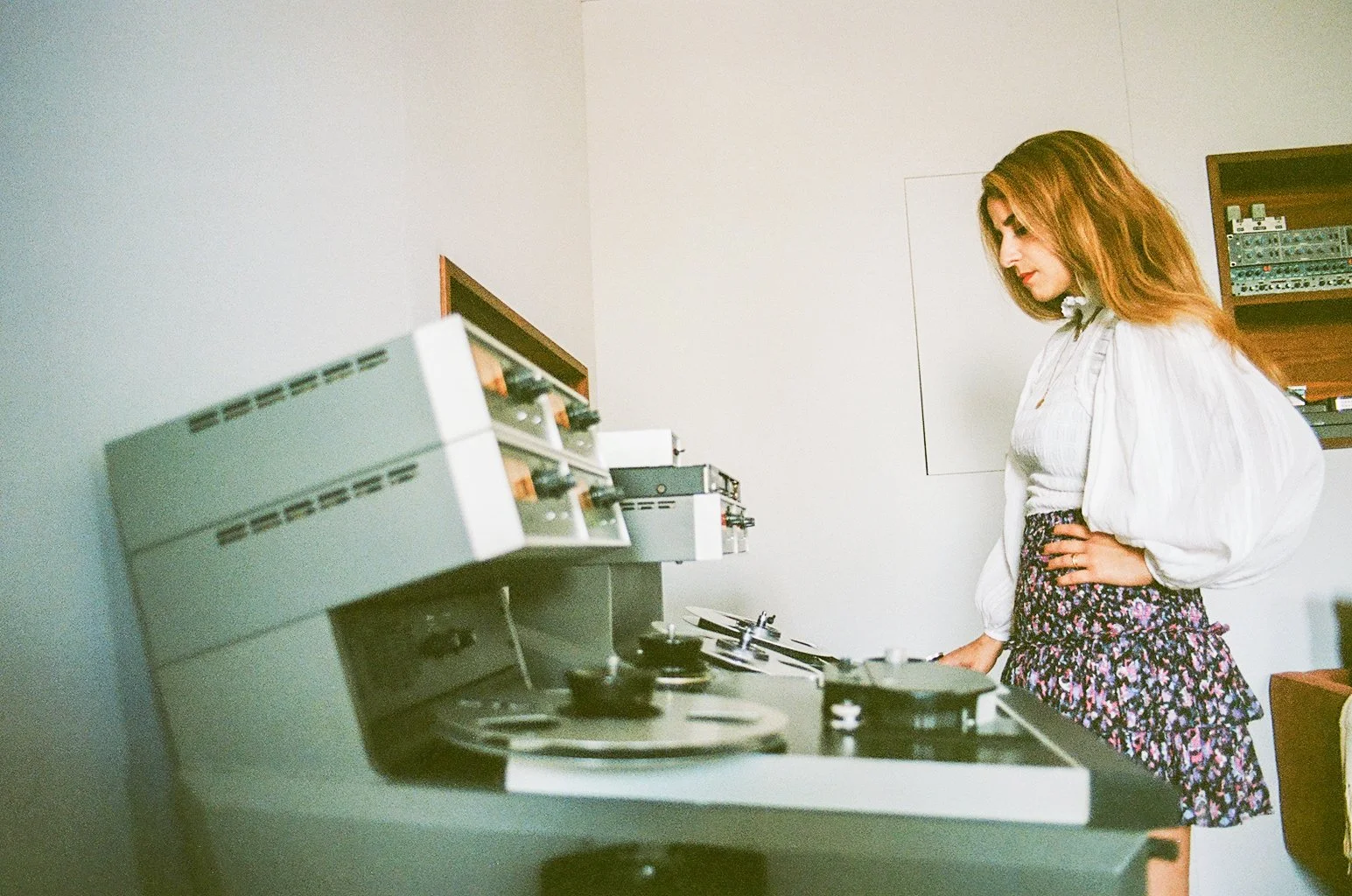
Photo credit: Olena Shkoda
She prefers the tape machine to “just being in the box,”by which she means working solely on a computer or surrounded by screens, noting that digital setups of two speakers and a monitor can bias decisions and flatten perspective. Which is probably why she laments the loss of the expertise: “the experts, especially in the analogue domain, are disappearing. The people who make and repair those machines go to the grave with that knowledge.”
Kadry balances this with respect for digital tools. “Not to be a naysayer – plugins and processing are incredible, especially for reissues and restoration tools” she says, positioning that while technological advancements can democratise sound, it shouldn’t replace the discipline and intuition that analog demands.
City Sounds as a Backdrop
I was curious to know how the cities of her life influence her from a sonic standpoint. Cairo’s cacophony and NYC’s rolodex of urban noise must have a certain charm that’s hard to shake when your work centres on listening. “I got on to the last wave of Williamsburg before the gentrification. I lived in this 2 block radius of like 10 venues. It was different then, everyone was scrappy and living in shitty apartments” she reminisces.
When Kadry arrived in New York, she caught the tail end of a scene before it transformed entirely, Williamsburg before the glass towers. Those days are mythologised in her memory as the time when sound carried the rawness of a community not yet priced out of itself.
Describing the cut-throat attitude that comes with places like Cairo and New York – living so densely amongst so many – she affirms, “I love the hecticness and chaos of it. It invigorates me.”

Photo credit: Olena Shkoda
This respect extends to many cities in the region: “from Beirut to Baghdad, we have such a deep relationship with music” she says. We briefly mention the once-thriving vinyl cultures of Syria, Libya, and Tunis. While impactful in its borderlessness, it makes me reflect on music as a fragile ecology, one easily dismantled by politics, war, migration, or economic instability. There’s a haunting awareness of how sound culture can vanish overnight.
Many of us come from this lineage of music-as-spectre, cities where vinyl shops disappeared due to the brain drain as a result of political turmoil, their sonic continuities fractured by canon events that ultimately reshaped their cultural futures. Kadry points to initiatives like the AMAR Foundation taking vital steps toward reclaiming and safeguarding the region’s sonic legacy.
Today, projects like Syrian Cassette Archives, Analog Armenia, and Sudan Tapes Archive work to revive and preserve what survives of those lost soundscapes on a more granular level. Archival work like this allows us access to a zeitgeist long gone through media, enabling the recovery of historical consciousness through sound.
Kadry dreams of restoring regional music infrastructure to the region, “I happened upon some great photos of Mohammed Fawzi when he started the first major pressing plant in Cairo, Misrphon before it got gobbled up by nationalization and the shift to cassette put the nail in the coffin.” she tells me. “I’d love to see this shift back again where lacquer cuts and vinyl pressing happens on our soil, not in Europe.”
Heba’s Picks of The Year
Having granted some of my personal favourite records of the last decade with her shining expertise, I was of course keen to find out who is going triple platinum in Heba’s headphones. “Beirut’s SANAM’s new album Sametou Sawtan”: they are a force. “It’s like if Baligh Hamdi and CAN made a record. I’m absolutely obsessed with these guys, they are probably the best band from the region and their live performances are a religious experience,” she shares.
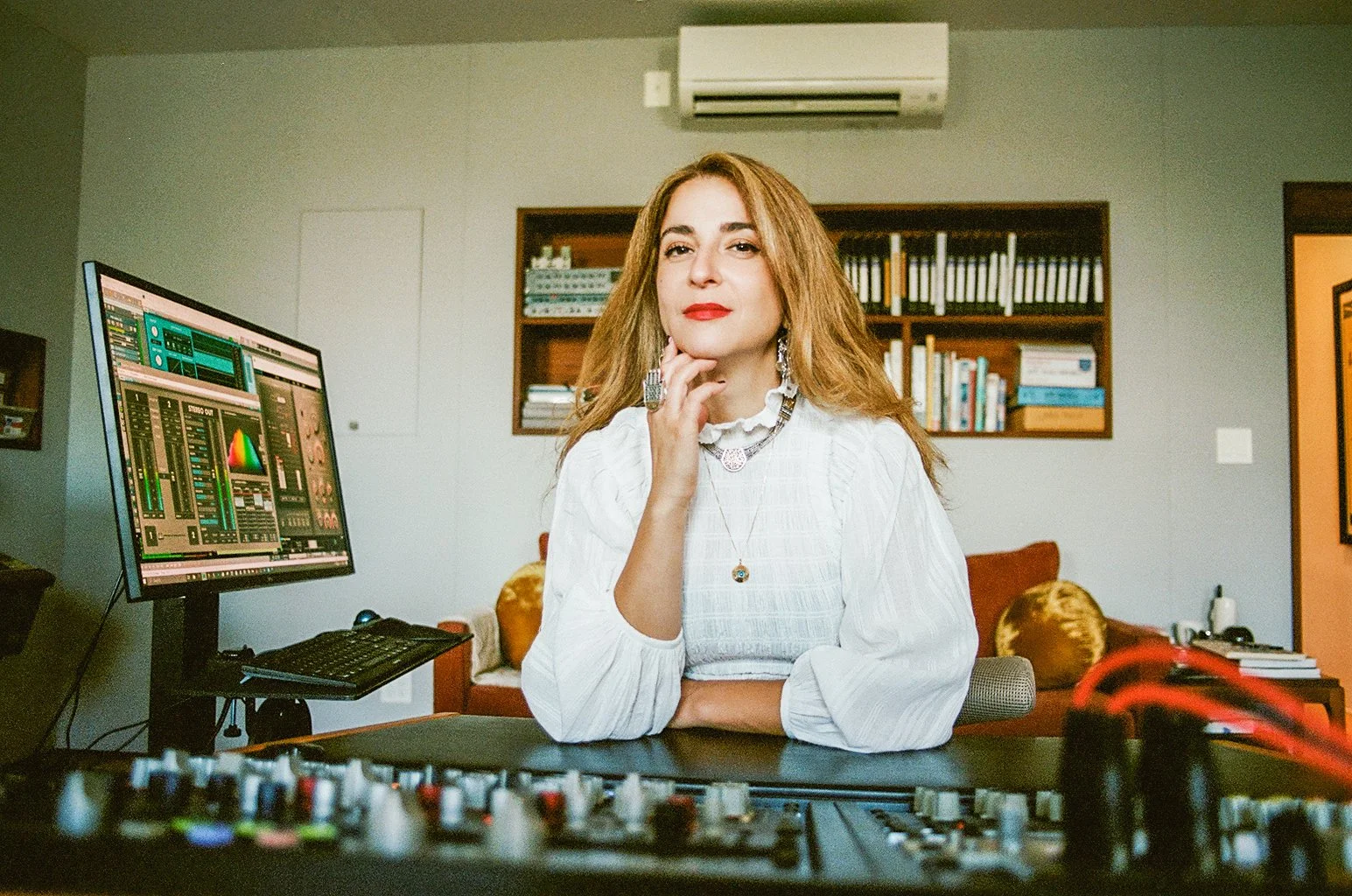
Photo credit: Olena Shkoda
Her admiration extends across disciplines and generations. “Fatima Al Qadiri’s score for François Ozon’s new film L’Étranger is a revelation. And Faten Kanaan, Nadah El Shazly, Nancy Mounir, Deena Abdelwahed and Maryam Saleh’s new albums are all incredible.”
She also points to her involvement in Chromesthesia, a research-led music project founded by British-Egyptian historian Hannah Elsisi, which traces the audiopolitics of diaspora across what Elsisi terms the Global Mangrove Archipelago. Spanning genres from Dembow and Mahragan to Amapiano, the project maps afro-diasporic and electronic traditions shaped by migration, resistance, and intergenerational exchange. “It tracks African rhythm across various continents,” Kadry explains, noting her personal affinity with its ethos.
There’s no shortage of work she’s excited by. “Moroccan artist Guedra’s new album MUTANT too – amazing polyrhythms, it really digs into pan-Africanism. YUNIS’ Ninety Nine Eyes, and Belgian-Iraqi trio Use Knife’s new album as well.”
Kadry speaks like someone spoilt for choice, energised by the sheer volume of talent emerging from the region and the genres being seeded in its wake, from experimental electronics to the shoegaze-inflected soundscapes of Kiss Facility, the duo formed by Mayah Al Khateri and Sega Bodega. As recent narratives around the MENA music industry increasingly centre commercial success or international-market-viability, it’s a relief to share this enthusiasm rooted in the simple yet human thrill of new, unheard sounds.
Artist Advocacy Amid Tech-bro Fascism
Kadry acknowledges ambivalence towards tech. Its intimidating promise of innovation. It’s a tension many of us carry: the thrill of new creative possibilities tempered by apprehension about what they might displace. “Even when drum machines came along, people thought drummers would go out of business because of the Linn Drum. It didn’t happen, it reshaped the landscape. It gave way to hip hop and electronic music.”
She mentions also how DAWs [digital audio workstation] were super-important for the post-Arab spring music wave. “You could literally have a recording studio in the room. You didn’t have to bankrupt yourself, you could make an amazing record at home. It set the pace and the path to people creating their own genres.” she says, citing artists like El Kontessa and ZULI,who push the boundaries of field recordings and sonic experimentation.
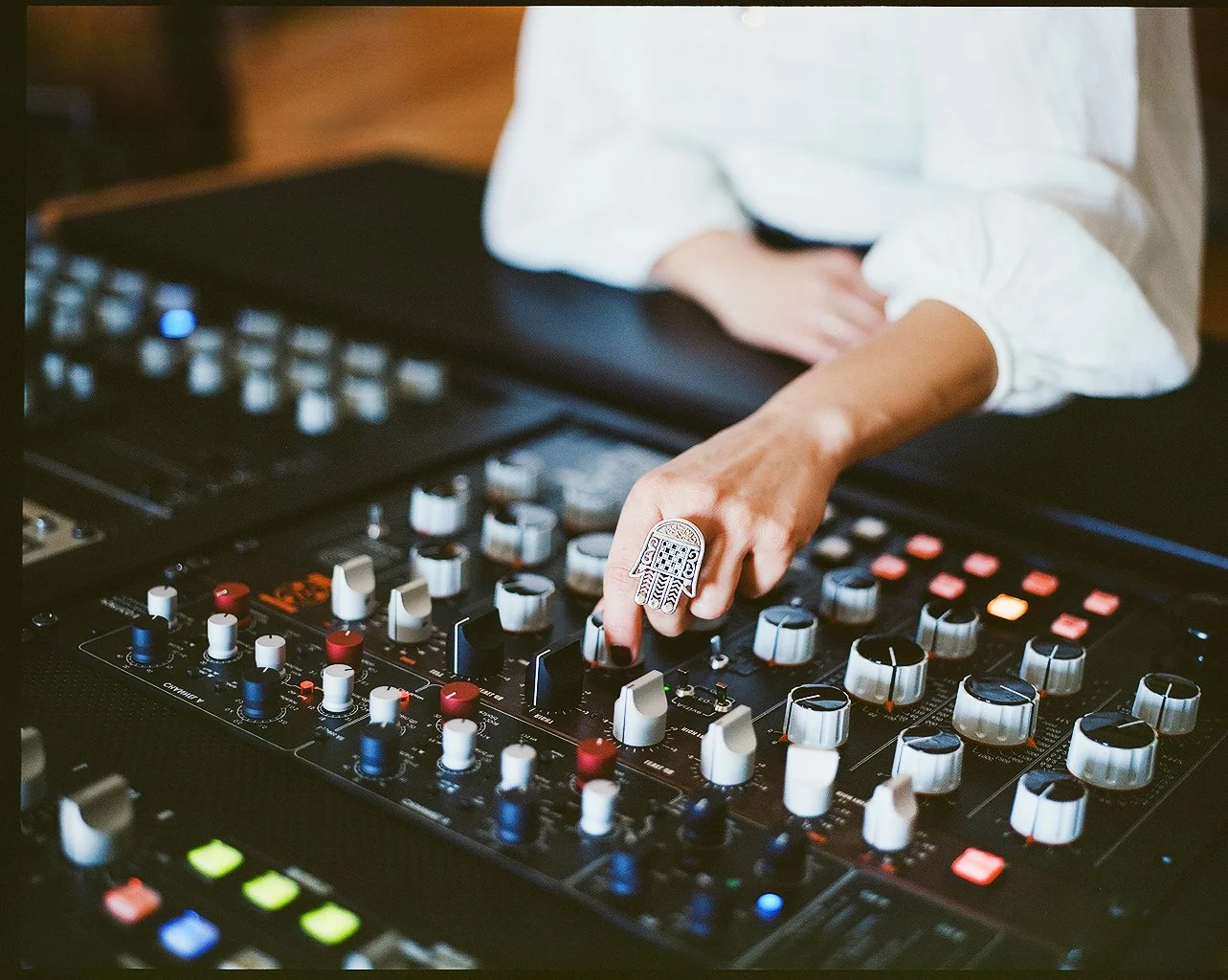
Photo credit: Olena Shkoda
She’s always been an artist’s activist, working with organizations like UMAW, she fights for fair compensation and artist rights. It doesn’t affect her financially, but the integrity that anchors her politics is what fuels her compassion in an industry completely gutted by the modern streaming model. “They were presented as saviours from piracy” she tells me. “Spotify is gaslighting us, all they did was offer what seemed like a ‘solution’ that eventually made it worse for artists.”
“There exists this tech fascism where the industry is owned by a handful of billionaires who don’t care about artist rights. They only care about content. This is a word that I fucking hate: content. It’s the most egregious thing you can call music” she asserts, and it’s refreshing to have my own disdain of art’s dilution and flattening into posts vindicated.
Lately she’s been absorbed in Liz Pelly’s Mood Machine, a book that unpacks the last 15 years of Spotify with forensic clarity. She relays its revelations: the huge advances paid to major labels with no obligation to share with the musicians; a byzantine royalty system where artists aren’t paid for their work, but for how well that work fares against a handful of megastars. She talks about Spotify Discovery, where artists can accept even lower royalties in exchange for algorithmic favour; the shift from “music enthusiasts” to “lean-back consumers,” birthing playlist culture and the rise of “Spotifycore” – music engineered to be as beige, frictionless, and personality-free as possible. It’s now more important to make it onto a spotify playlist than to finish the work the way you intended.
And then there’s the “perfect fit content”: generic stock tracks, buried behind fake artist names, made by anonymous session musicians paid a flat fee to churn out ambient mush “as milquetoast as possible,” now filling official Spotify playlists. With AI looming, even those musicians are about to be erased. It’s music for ‘everyone’ that eventually becomes music for no one.
“People have to understand these streaming companies are not music companies,” she says. “They’re data-farming companies and advertising agencies. They profit off aggregation, ads and backdoor deals with labels.” She laments that “music is in the hands of these tech bros,” and she’s right: in their irresponsible clutch, the nature of music barely rewards the artists who bleed for it, and it blinds the listener to what’s actually going on. “They don’t understand the sweat and blood and tears that goes into the making of an album,” she asserts.
“This is Within Us”
It’s the same moral backbone that galvanises her support for Palestine. Kadry had agreed to co-curate Le Guess Who?, never imagining she’d be doing so barely two months after October 7th, in November 2023. What steadied her was the festival’s refusal of industry posturing: “they really shun the industry bullshit – such as big name marquees, everyone is on the same level. They got really good at logistics and navigating visas for people from countries where it’s hard to get visas. They really care about our regional artists.” When Palestinian artists couldn’t travel in, the festival refused to replace them, leaving their slots deliberately empty – a statement in itself that cut through the industry’s tepid, sanitised responses.
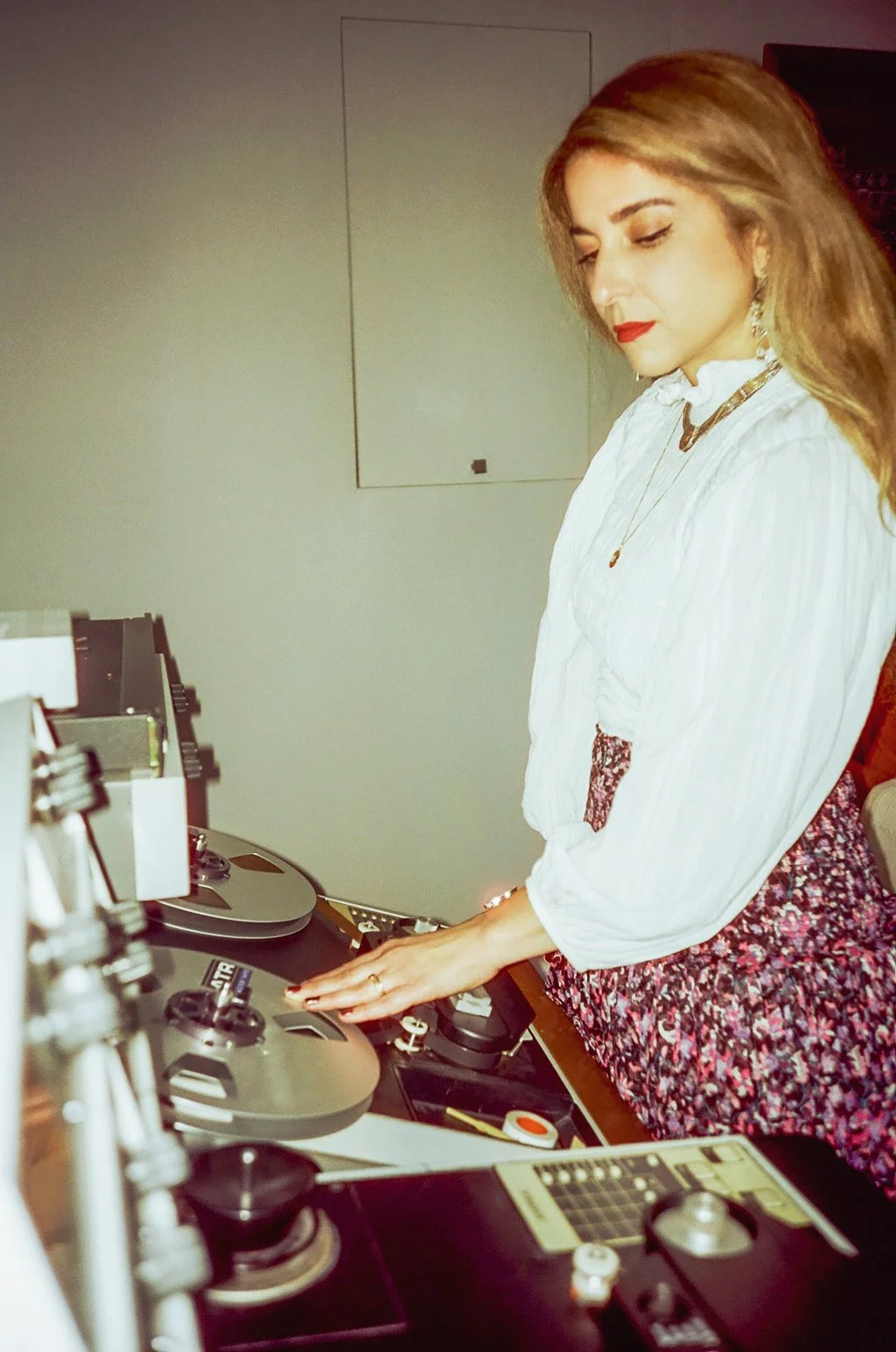
Photo credit: Olena Shkoda
She continues, “sometimes I get disillusioned, I think no one gives a fuck, then I see hundreds of people, totally enraptured by artists from the farthest corner of the world.” She recalls one moment in particular – Paris-born, Palestinian musician Kamilya Jubran on the oud, singing To the Children. As Kadry describes it tearfully, we both fall apart a little. The song, performed mere weeks into Israel’s assault on Gaza, landed like a collective wound being named aloud. Its lyrics echoed the private monologues so many of us carried: children dying before their age, unnamed, uncounted, slipping into “hidden places between the earth and sky.” In that room, Kadry felt the grief sharpen into something communal, a reckoning held through sound.
She backs the No Music For Genocide campaign wholeheartedly, praising Massive Attack’s stance and the growing wave of artists pulling their catalogues from Spotify after Daniel Ek poured hundreds of millions into the military-AI firm Helsing. “We now have all these artists saying: we’re not gonna let our music be streamed in a state actively enacting a genocide,” she tells me.
Kadry is familiar with the material consequences of Zionism’s encroaching threat on the region, it is not just geopolitical abstraction. Her uncle fought in the 1967 war, dying in his infantry in Sinai. “This is within us,” she shares. “We knew about Palestine from the age of five. Our families made sure. It is our shared weight.”
She continues, “I have so much appreciation for artists that really go hard for Palestine, They take a huge hit but they do it cos it’s right. The Sam Cookes and Nina Simones. They really set the precedent, to do something when you witness injustice” she says, citing the advocacy of Shirley Manson and Annie Lennox. And while she knows her own outspokenness has cost her work, she’s resolute: “I don’t want to work with anyone who can see what’s happening and stay silent.”
Our inherited responsibility, as heirs of a lineage ruptured by colonialism and imperial looting, is to view the world through a prism of moral, political, and economic solidarity with causes that the music industry too often obscures. It guides our choices. “When I get asked to be on a panel, I have to check, who is sponsoring this shit? I didn’t think as much before. But it’s a good thing, honestly. We’re finally interrogating the systems of repetition that have normalised the destruction of the Middle East. You being from Iraq, you know what that’s like,” she tells me – and she’s right, I do. After years of silence and complacency, the tide of accountability feels welcome, if not a little overdue.
Kadry moves with a rare attentiveness. She leaves a seismic imprint on the contemporary soundscape, shaping some of the decade’s most unforgettable records. That sensitivity to the frequency of sound is the same tenderness that pillars her compassion. She embodies what it means to be both technically brilliant and culturally fearless, attuned as deeply to the tremors of the world as she is to the music and to the urgencies of her own heart, listening always, to the sounds – and the voices – that slip past everyone else.